Showing posts with label #hsreviews. Show all posts

Essential Skills Advantage Review

For the past few weeks, Olivia has had the chance to practice her reading readiness skills using Complete Home Learning Suite from Essential Skills Advantage

Essential Skills Advantage (or ESA) is an online skills practice program for grades Kindergarten through 6th grade.  The program covers Reading, Language & Grammar, Math, Science and Geography. This supplemental program has over 14,000 online lessons to help students practice and reinforce basic skills. The lessons are self-paced, allowing the student to complete different subjects however they choose. ESA can be used by a single student or up to 10 students at the same time and can be used on the computer or any mobile device such as a kindle or iPad. Each child has their own login. You can choose to set them up with a password or not.

SmartKidz Media Library for Homeschoolers


My children love to utilize online media both for schooling as well as just for fun but I am super cautious as to what they access and can view. We recently had the chance to review SmartKidz Media Library for Homeschoolers from SmartKidz Media. This is an online digital streaming resource that is safe for kids to access! The media resources come in the form of videos, games, e-books and even study guides that can be accessed on any device that has internet. This was a big plus as my children could all access the website at the same time on different devices if they wanted.
When you first log in, you'll notice tabs at the top of the page. These tabs break down the different areas of the website and include:

  • World of Discovery- This breaks down even further in different video subjects such as animals, history, science, travel, exercise videos, documentaries, etc. This was one of our favorite areas!

Click on photo to enlarge

  • Music & Fine Arts- This section has classical & cultural music, blues & jazz as well as relaxation music.
  • The Mighty E-Book Collection- In this section you'll find all sorts of animated books that are broken down into different sections based on age as well as subject such as Aesop's Fables, science, reading readiness, etc. There's even a section that has classic sing-along songs. A special note about the books in this area is that they are read to the child and as they are being read, it shows the highlighted word as it's being read so it makes it easier for your child to follow along with.
  • Baby Signs Program- This is a great resource if you are teaching your baby sign language! There is even a section about potty training.


  • My Animal Family Program- This section is broken down into different categories- video storybook, fun facts and story songs. The video storybook was our favorite as it showed baby animals in their own environments.
  • Quick Find Study Guides-This section is a large resource in helping kids in different subjects such as math (which covers basic math all the way to trigonometry), science, social studies, language arts. They also show that accounting and foreign languages is coming soon.

This is a screen shot when I clicked on Language Arts. You can see the different topics that it covers.

When you choose your topic and click on it, you get a note card view that tells you the definition and gives examples.

  • Easy Learning for Special Needs- This section was developed by special need educators and therapists to help teach person, social and coping skills. The books are presented 2 different ways. "Hear the Book" plays the entire book as a movie and "Interactive" read the book page by page, highlighting the words and has the child clicking "next" to turn the page. The subjects in this section cover everyday life, going places, holidays and celebrations, sequencing, arts & science and sing-a-long story songs.
  • Living Skills Songs- This section is listed as coming soon but their description says they will have fun & lively songs that help teach children life skills.
  • Ready, Set, Sing- This section has over 200 songs that you can stream. This is handy to play on your phone in the car for the kids!
  • Fun Zone- This area has interactive games, jokes & riddles as well as puzzles.


As you can see, there is such a wealth of knowledge on this website, I only shared about just a small fraction. SmartKidz media is also continuing to add on more content to their website which they let their subscribers know about in their monthly newsletter. The website is easy to use, just click and go!

Our family is enjoying the subscription. We typically use the website on the iPad or laptop though we do have the ability to hook up our computer to the tv to stream the videos that way. We enjoyed Miracles of Nature: Part 4 that covers the Caribbean as we have been to some of those islands. My history loving son enjoyed the videos on World War 2. My older children are looking forward to utilizing the study guides when we start back with our regular schooling. We typically borrowed educational videos from the library, so I am enjoying having a selection available any time we want saving me a trip out to the library (and potentially not returning it on time!)

If this sounds like a subscription your family would enjoy, you can try out their 2 week Free Trial.


SmartKidz Media Review
Crew Disclaimer

Institute For Excellence in Writing-SWI

Over the years, I have found that teaching writing to my girls to not to be too terribly difficult. I myself enjoy writing so I was left scratching my head when it came time for my son to write reports and stories and he found it challenging. I have tried many different programs that left both of us frustrated. I had heard of Institute For Excellence in Writing (IEW) but never really looked into much. That is until I recently had the chance to review Teaching Writing: Structure and Style (TWSS) as well as Student Writing Intensive: Level B (SWI).


Let me preface this saying that this is a HUGE program and I am only scratching the surface with this review. Even in doing my research prior to receiving this curriculum, I still was amazed all that this program covers once I had it in my hands.

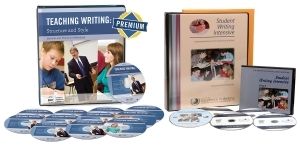
Teaching Writing: Structure and Style is actually a program for the teacher/parent so they know HOW to teach this program. This is the foundation to this curriculum. What you receive is 12 DVD's with over 14 hours of instruction from the IEW director, Andrew Pudewa. The first 9 DVD's cover the entire 9 unit course and the last 3 DVD's are video clips of Andrew in action teaching all the levels (K-12th grade). The DVD's come in a nice leather case with the seminars recently revised and updated. These discs cover:

  • Introducing Structural Models
  • Introducing Stylistic Techniques
  • Retelling Narrative Stories
  • Summarizing a Reference
  • Writing from Pictures
  • Summarizing Mulitple References
  • Inventive Writing
  • Formal Essay Models
  • Formal Critiques and Writing About Literature
as well as 3 other discs giving demonstration lessons for grades K-12 and taking notes from a live lecture. You also get a premium one year subscription which allows you to stream the seminar videos, some PDF downloads, audio recordings, as well as monthly webinar training.


The other part that accompanies the DVD's is a Seminar and Practicum Workbook which is a 234 page binder that covers the 9 units that are taught to the student. Also in these units you'll find teaching tips, answers to frequently asked questions, student samples for each level as well as other info in the back of the binder. The binder comes with tabs to divide all the units up making it easy to locate what you need.

The other piece of curriculum we received was The Student Writing Intensive: Level B. This includes 5 DVD's in a hard case, 4 of them with the student lessons and one disc being the parent overview.The discs include:

  • Disc 1-Outlines, Summary, Dress-Uo
  • Disc 2-Story Summary, Dress-Up
  • Disc 3- Reference Summary, Paragraph Structures, Sentence Openers
  • Disc -Creative Writing, Sentence Openers

 There is also a student binder that includes 5 tab dividers for their work and handouts to be stored:

  • Models/Sources Checklist
  • Outlines/Compositions
  • Structural Models
  • Style Charts
  • "Banned Words"

The other piece we received was a manila envelope that had the teachers notes and student handouts included. The syllabus and course schedule at the beginning tell you exactly what your student does each day. I LOVED this part otherwise I think I truly would've felt overwhelmed trying to teach this. It also tells you how much of the video lessons to watch and where to stop it at to begin the writing exercise. Also, if you have a special needs learner, there are a lot of notes on how to help adapt this program for them. I put this entire section into my own binder to keep it organized.

How Does It Work?

The program is meant to be covered in either 15 or 30 weeks. We chose to do the 30 week schedule which is what I read that many do. You cover 1 unit roughly ever 4 weeks and you watch the DVD lesson every 2 weeks (each lesson takes 2 weeks to complete) . While the course schedule tells you to do what work to do each day, they do encourage to adjust the schedule to best fit your student.

Before starting the student lesson, the teacher needs to watch the seminar on the TWSS DVD. You can either watch the entire seminar in one sitting or break it up into parts, watching the section that pertains to the lesson your student will soon be covering. This is what I did and by doing it this way, I was staying 2 or so weeks ahead of the lesson my son was working on.

When you first start a lesson, there is a video to watch. They encourage the parent to sit down and watch it with their child so they know exactly how and what was taught to be able to better help them.

From there, we just followed the syllabus and the schedule listed in the teachers manual. In the teachers manual, at the beginning of each lesson, it tells you what they will be working on such as making a keyword outline (which they also provide a list of what these words could be so if you as a teacher aren't sure, there is something to reference.) There are a lot of helpful notes in this section with even references of web links to give further help. After the teachers note, the student handout papers are there and you give them to the student when the schedule says to.

IEW


How We Used It

Let me tell ya, when I opened up the box of curriculum I was overwhelmed by all I saw. I was thankful for the paper laying on top that was a quick start guide. It told you what package to open and what pieces to put in what binder and the order it needed to go in. I did notice that they have an online forum so if we needed support, we could easily go here to ask questions.

Once I had everything in place, I watched part of the TWSS DVD to prepare myself on how to teach my son. Just as a note, you could use this program with just the TWSS portion but I love having curriculum already put together so I don't have to do that so I couldn't imagine not having the Student Writing Intensive on hand as well.

One of my tips is that I used sticky tabs to post on the syllabus page and one on the current lesson page, making it easy to quick go to!

At the beginning of each lesson, my son and I sat down together to watch the lesson and I gave him the handouts as directed. From the very first lesson, my son was encouraged. See, IEW starts out by giving the student a written paragraph and teaches them how to pick out key words called a keyword outline (KWO). They pick out 3 words from each sentence and write them down either using the word or a symbol to represent a word. 3  of the words or symbols are written per line then they eventually rewrite the paragraph in their own words. Other curriculum's we had used would give a subject and expect the student to write about it and that is where my son struggled. He said it made sense on how to write a keyword outline by using something already written out. He spends 2 weeks practicing each lesson by writing several different pieces which helps him with mastery.

There is also a composition checklist that goes along with each written piece he is to complete. This reminds him to make sure his writing includes the things he just learned about in each lesson, to make sure it's double spaced, etc.

The lessons continue to teach more writing skills such as using adverb dress-ups, words they shouldn't use such as "said, thought and went" and using more creative words in place of those, reinforce who-which clauses, writing titles and so much more.

I do think we FINALLY found the writing program that clicks for my son and is something he WANTS to do! This curriculum will also help teach him the skills that he can take over into his other subjects and how to write reports and papers.

I keep the entire curriculum in a tote making it easy to grab when it's time to do writing!

I anticipated this program working well for him so in addition to the products I received to review, I also purchased A Word Write Now which is a thematic thesaurus. I know part of my sons challenge is coming up with creative words so I figured having this at his finger tips would help expand his vocabulary as he writes. I also purchased Portable Walls which is a sturdy fold-out that has key points for each unit that he can look at at a glance for a refresher as he is writing. It also has some word lists as well. My goal in purchasing these 2 items was to make writing easier from him with tools available at his finger tips.

Connect with IEW on:
Facebook
Pinterest
Twitter
IEW Blog

IEW Review
Crew Disclaimer

Spelling You See


Many of you are familiar with the curriculum Math-U-See by Demme Learning. But did you know they have also created a spelling curriculum called Spelling You See? We recently had the chance to review Ancient Achievements- Level F

Spelling You See Level F

What it is
Spelling You See has a unique approach in how they teach spelling. Gone are the boring spelling lists that are mindlessly rewritten numerous times. They offer 7 different levels of spelling curriculum. Each level contains 36 weeks of lessons that are divided between 2 books. Each week splits into 5 sections labeled A-E. Each section is a 2 page layout and should only take about 10-15 minutes each day to complete.

What's included
With each level you receive:
2 consumable student books
1 instructors handbook
1 pack of Crayola erasable colored pencils
A special code that gives you online access to several different videos showing you how to use this curriculum as well as some PDF downloads.

How it works
On day A, the student reads the passage out loud to the parent. In level F, they read passages that have to do with Ancient times and events. Some of the cultures talked about are Sumerians, ancient Chinese, Greeks and their war with Troy, King Arthur, Robin-hood, Leaning Tower of Pisa and so much more.

After they read the passage, they then are instructed to do "vowel or consonant chunks" with a colored pencil. There is a box on the page that shows a list of what the chunks are. The idea behind chunking is to help the student learn specific letter patterns which will help them learn to decipher words & sounds on their own eventually. 

After the student reads & chunks the passage on the left hand side, they move to the second page on the right where the passage they just read is printed out with a blank line under the pre-printed passage. The student is then to do copywork and write out the passage just as they see it written. The directions also state the student is then to chunk the passage they just wrote.

Day B & Day C do the same as the above instructions.

On day D, the student does the read aloud, chunks the passage and then on the second page, they have to write the passage out as it is dictated to them. They are allowed to ask for help with punctuation and capitalization as well as tougher words to spell out. At the bottom of the page, there is a place for the parent to write how many words were spelled correctly.

On day E, the student reads the passage out loud, chunks the passage and then on the 2nd page, they have to write the passage as it's dictated with no help. At the bottom on the page, there is a place for the parent to write how many words were spelled correctly, the goal being to have more words correctly spelled this day than on day D.

The instructors manual provides a wealth of info on how best to implement this program. It gives you an overview of how and why this curriculum works, it shows an over of each lesson and what is being taught, explains how to chunk certain combinations, resources for each lesson as well as an answer for the chunking in each lesson.

How we used it
We did 1 lesson a week which meant we did one part each day that took no more than 15 minutes each. It was easy for my daughter to read aloud the passage as I was getting breakfast ready in the morning. From there, she went on to chunk the passage the first 3 days. Even though the directions said to then chunk the written passage, I usually let her skip this as she seemed to grasp the concepts. When it came to the dictation parts, either I or one of my other older children could read it to her while she wrote it out.


We really enjoy this curriculum as it combines so many things. The student learns interesting facts with each passage (can we say history?) They get to practice their penmanship with the copy work. The focus on the dictation passages is on how many words they got correct, not wrong. Positive reinforcement is always a good thing. I also love how everything is spelled out on how use it in the instructors manual so there is no work for me in prepping it. Also, each level goes by a letter and not a grade, especially good for those that might be struggling. This curriculum is based on ability level, not age or grade. To best figure out what level your student is on, you can have them take the placement test. Another thing to note, the student pages are perforated, so for those who like to remove pages either as they do them or for a portfolio, they come out of the book with ease.

You can read about our review from last year on Level E-American Spirit
Spelling You See Review
Crew Disclaimer

Memoria Press-First Start Reading

My preschooler has really been soaking up learning lately so I was excited to recently have been given the chance to review First Start Reading from Memoria Press. I have had the chance to use curriculum from Memoria Press in the past and we have really enjoyed their approach to learning and the ease of use of their curriculum.

What is it?

First Start Reading is a classical curriculum that teaches reading, phonics and printing that includes focusing on correct pencil grip. Granted, my daughter was a little on the younger age for this curriculum as she will only be 4 in July but she has really shown an interest in learning phonics and can already write her name. Knowing those facts, I figured she would really enjoy using this curriculum. They focus on the more traditional approach to phonics learning the vowel-consonant style as well as learning word families along the way.

First Start Reading-Memoria Press

The full curriculum package contains a 322 page teachers guide and 4 consumable student books that costs $42.95. This curriculum can be used in a classroom or homeschool setting as indicated in the teachers guide.

Teachers Guide

The teachers guide takes 2 pages per lesson to walk you through how to implement the student book and even gives suggestions for dialogue to say to the student. It starts out having the teacher/mom pointing to the photos in the student book and asking them what the photos are which then leads to talking about what letter they start with. From there, you go on to show them the sound the letter makes. You then share words with the student and ask them if those words start with the specific letter sound you are working on.

After discussing the letter and its sound, you then show them how to form the letter in both lower & uppercase. They suggest using a chalkboard or whiteboard for this part. Then you move onto having the student practice writing the letter in their book.

Teachers Guide on the left, student book on the right with my daughter practicing writing.


Student Workbook

Each lesson has 2 pages. When they are learning a new letter, the first page shows the upper & lower case letter then it has 2 black & white pictures of something that starts with that letter. The child can color those photos. On the page next to it, there is a blank box for the child to draw their own photo that starts with that letter. Below that, there are several lines for the child to practice writing the letter being highlighted on that page. The first line has light dots for the child to trace for the uppercase letter then the next line they are to write it out themselves. The 3rd line has dots for the student to trace the lower case letter with the 4th line blank for them to practice writing it themselves. The 5th line has a combo of upper & lowercase letters for the child to trace & write.

Every couple of lessons, the curriculum takes the previous letters the child learned to combine them into a word. For example the first 2 lessons in "Book A" teach the letters "M" and "A". The third lesson them combines them to teach the student the word "AM". The approach is unique in that there is a dotted line linking the 2 letters together so you sound them out slowly joining their sounds together. The child also traces and writes the word as well.

In the later books which we haven't gotten to yet, the lessons have the student writing out full words and reading short stories. There are also pages where the parent dictates words for the student to write (basically like a spelling test).


How we used it

My daughter could not WAIT to start this program! I only wanted to do one lesson a day so she would be able to soak in what she was learning but boy she begged to do another lesson once we were finished for the day. I would sit down with her and point to the letter at the top of the page and tell her what it is (she knew many of them prior to starting the curriculum). Then I'd ask her to tell me what the pictures were and we'd overemphasize the letter sound. From there, I'd recite some words to her and ask her if they started with that specific letter. Then I'd ask her to come up with words on her own that started with that letter.

Afterwards, I'd ask her to come up with a picture to draw starting with that letter. Then I would very lightly write that word in pencil in the photo for her to trace. After she was done coloring the photos on both pages, we'd move onto how to write the letter. I had a small white board that I used to show her how to write the letter then I'd let her practice. Once she felt good about writing it, we'd move back to the student book where she would follow their guidance and practice writing her letter.

Not too bad for a 3 year old!!!

By the 3rd lesson, she was reading her first sentence, "I am Olivia"!!! She was SO incredibly proud! Throughout the days after her lessons, I would occasionally ask her what letter or word she learned today and the sounds that they made just to make sure she was still recalling it. I am beyond impressed how well she is learning at such a young age her phonics and even her handwriting is blowing me away.

I truly wish I had had this program when my older children were preschool/kindergarten age. I LOVE that there is NO prep work at all for me, I can simply open up the teacher guide to see what I am supposed to do with her and we sit down to do the work. I'd say we spent 20 minutes a day on a lesson but keep in mind she is only 3 and I added a bit to the lesson to really help drill the letter & sounds with her. I will definitely be using this with my other preschooler when she is ready to start learning her phonics!

Connect with Memoria Press on:
Facebook
Twitter
Pinterest
Google+
Instagram
Memoria Press Review
Crew Disclaimer

Alphabet Song Game

My preschooler loves to sing her ABC's and has been actively working on learning to recognize each letter. She was excited recently to be able to review Alphabet Song Game from The Critical Thinking Co.


Alphabet Song Game is available as a windows download. It can also be put on Apple and Android devices. I received this as a windows download which was very easy and quick to install on my laptop. (You need to have Windows 8, 7 or Vista).

The game opens with a simple click to the icon on the desktop. Once the game opens, you have an option to choose a lesson about uppercase letters, lowercase letters or mixed case letters.


As your cursor highlights a lesson, a box on the right hand side gives a description of what the game entails and how many letter choices there are in that game. Each lesson gets progressively more challenging. Also on this screen you can see the score your child got for each lesson. Keep in mind though it only keeps track for one child so if you have multiple children using it, the score that is shown is from whoever last did that lesson. My preschooler as well as my nephews both used this program and I didn't bother keeping track of who had what score.

Once you click on a lesson, a screen pops up with a gal on the one side and the letters coming on the screen as she sings the ABC song. Once she's done singing, you then have letters displayed on the screen. Depending on the lesson you are on will determine how many letters to choose from. In the higher lessons, some of the letters will also be displayed backwards or upside down.


The goal is for the child to click on the letters in the correct order. As they click on the correct letter, it then goes up top with the other letters until the entire alphabet is up top. One thing I noticed is if they clicked on the wrong letter nothing happened. I would've liked some sort of sound to be heard when they chose the wrong letter so they knew it was wrong. Otherwise my daughter sometimes thought she wasn't using the mouse correctly or wasn't hitting the button to click on it not knowing she had chose the wrong letter.

This game can be played in just a matter of minutes. My 3 year old asked to play it several times a day. My nephews ages 3 and 5 also played this. Even though it's a simple game, it really does help them learn to identify their letters through repeatedly playing the game. While my daughter hasn't gotten too far into the upper lessons yet, I can see how in time she will eventually need the more challenging lessons. Just in the time she has used this game, I can see she is able to identify her letters much more quickly compared to before she used this game.

I loved the simplicity of the game and that she is able to do this on her own! It's also available free at the time of this writing so go check it out!

Connect with The Critical Thinking Co. via:

Critical Thinking Company Review
Crew Disclaimer

Clued in Kids

Clued in Kids, treasure hunt


My kids love games and treasure hunts so they were excited when we were recently asked to review Clued in Kids. They have a variety of scavenger hunts available in both a physical book as well as PDF downloads. We received the Slumber Party Clue PadPrincess Treasure Hunt Clue Pad, and the PDF download Winter Treasure Hunt.

What is it?

Clued in Kids is not just your typical treasure hunt with simple clues. This company has taken a unique approach to an age old game and gave an educational twist to it.Throughout the clues, kids will find themselves using logic to complete puzzles or unscramble words, math to solve problems that unlock letters, telling time as well as other skills that are incorporated in to helping them solve each clue.

There are a wide variety of themed scavenger hunts to choose from. You could either order the physical product online, or purchase a PDF file that can be downloaded immediately and printed to be used right away.

How it works:

For our Princess & Slumber Party treasure hunts, it was simply a matter of tearing each clue out from the book and reading at the bottom of each clue where to hide it. Each hunt contained 12 clues as well as an answer sheet of where each clue is hidden.

Setting up the PDF Winter Treasure Hunt was easy. I was given a link to download the PDF that I then saved and printed the 8 pages it contained. Each page contained 2 clues that I had to cut apart. From there, it was the same as using the physical product in that I hid the clues where it stated to on the bottom as well as having an answer sheet of where each clue was hidden. These scavenger hunts do not come with a prize to be found at the end but that's ok. It allows the parent to be creative in what they hid as the treasure!

Once I figured out what treasure I was going to hide, I worked on setting up the scavenger hunt. I had the kids all go into one room so I could hide the clues. Examples of hiding places were in the dishwasher, by a doorbell, by eggs, near toothbrushes, in towels, under the couch, etc. If by some chance you don't have a hiding place that the clue suggests (say a microwave), you can just hold the clue and make your child do an activity (like jumping jacks) to receive it when it comes time for that clue. It only took me about 5 minutes to set up the entire treasure hunt.

Because some of these clues required multiplication and unscrambling of words, I had my older children help my little ones. It's a great way to teach teamwork! There is also a spot at the top of each clue that you could write in a childs name to assign specific clues. I left those blank as I wanted my kids to do each clue together.


My teens thought they would breeze through the clues but they found some of the puzzles took them a little bit to figure out. My only suggestion would be to have an answer sheet for these for the parent to reference as I admit there was one or 2 that I wasn't sure of right away.

To my childrens surprise, there weren't just riddles & puzzles they had to figure out but also silly activities they had to do! I could only get my 3 & 11 year old to do them as my teens didn't want their photos or videos taken while doing it but they did have fun watching. Some of these silly activities involved snorting like a pig while reading, dancing on your front porch in your pjs, make headgear out of toilet paper and walk the catwalk, walk around the room balancing a book on your head, etc. Many laughs ensued as they did these activities.

Watch this video to see some of the activities in action!

It took my children about 20 minutes to complete each hunt though I imagine if you were doing this with a larger group of kids and only had 1 child complete each clue, it would take a lot longer. I think these treasure hunts would be great for birthday parties, sleepovers, playdates or something to save for a rainy or cold day.

Finding the "treasure", which was a rare treat of candy! And no, that wasn't all for her!

Even though each hunt is done in similar fashion (puzzles to solve, activities to complete, etc), each treasure hunt had clues and pictures that went along with it's theme. The slumber party hunt used objects and clues that would go along with a slumber party as well as silly riddles that you can imagine a group of kids giggling over.

The winter treasure hunt included cold weather items such as snowflake pictures, riddles that have to do with winter activities, hiding clues with pjs and using winter clothing for a funny dress up dance.

The Princess Treasure Hunt used pictures of knights & jewelry to solve clues as well as having the child practice their best curtesy or bow. This would be a fun hunt for a princess themed birthday party!

Clued in Kids can be used with children as young as 4 and can be adapted for older children as well. While 1 child could do the treasure hunts, it certainly is a lot of fun with multiple kids & ages. Stop by their website and check out their free puzzle maker to make your own scavenger hunts as well as check out their Christmas Products available.


Connect with Clued in Kids on:

Click to read Crew Reviews
Crew Disclaimer

My Student Logbook

This school year I have set out to be a bit more organized in our homeschooling. Part of this includes putting some of the responsibility on them for making sure they complete all their assignments. I was excited to recently have the chance to review My Student Logbook as this seemed to be just what I was looking for, especially for my son this year. My Student Logbook was created by a fellow homeschooling family so they knew the exactly what a homeschooler needs for student organization.


What is it?

My Student Logbook is a simple and easy to use log that puts the responsibility of completing schoolwork and tasks in the hands of the student. A parent takes a few minutes to write down general assignments or chores on a reusable checklist, then from there the student checks off boxes as they complete each item. You can choose to purchase a dated logbook for a school year (August to July), a calendar year logbook (January to December) or you could choose an undated logbook. There are also a variety of covers you can choose from as well as having the option to purchase a PDF download.

How does it work?

When you first receive your logbook, there is a quick cut and tape process involved to get started which is easily explained on My Student Logbooks website. After you have the reusable flap in place, then it's the parents job to write down assignments, chores or other responsibilities you want your child to complete. There is also a space where you can record how much time they should spend on an activity or what time of the day they are to complete that item. Once the assignments are written down, you give your child the book to be used daily. It's a simple way for the student to know exactly what is required of them each day without you having to constantly remind them. If you need to redo their assignments, you simply attach a new flap and write down the new assignments.

Also included with the logbook are pages to record extras such as:

  • all about me 
  • prayers and goals
  • Bible verses memorized 
  • books read 
  • activities pages to record field trips, projects, etc
  • test records
  • favorite memories from the year


My Student Logbook


How did we use it?
I chose the undated logbook and my son chose the fighter jets cover. Once I received the logbook and got the flap in place, I wrote down things I wanted to make sure Erik completed each day. This included writing down the subjects he needed to complete as well as his chores. I also wrote down reminders such as making sure his bed was made, clothes put in the hamper, etc.

The idea behind this logbook isn't to write down specific assignments (I use a lesson planner to record those), rather this is a general way for a student to see what needs to be done in a days time and checkmark it as it gets completed. I have found this has saved me a lot of repetition with my son. He used to complete one subject and ask me what else has to do and I found myself repeating what he needs to do more times than I care to admit. He also knows by looking at his logbook that if something isn't checked off yet, he can't go have free time where as before, I would find him wandering off as he would forget what else he needed to be working on.

My Student Logbook is so simple to use but it really has saved us a lot of sanity! I can tell at a glance where my son is at in his school day by seeing what all is or isn't checked off. It also helps keep him accountable and gives him the responsibility to follow his daily list.

My Student Logbook is intended to be used by students reading on their own (approximately 2nd grade and older). You can also use this daily student planner to create a high school transcript. My Student Logbook can be purchased for $15. It can also be purchased in a PDF download (a single use license for $10 or a family license for $20).


Click to read Crew Reviews

Crew Disclaimer

Happy Kids Songs

Our family is big into music! If you stopped by our house at any given time, most likely you will hear music playing on either our stereo downstairs, the iHome upstairs or see one of the children with headphones on listening to their iPods. I can easily recall lyrics from songs I heard as a child so I was excited to review a set of songs from Happy Kids Songs.

Happy Kids Songs


We were given 3 volumes to review, totaling 15 songs:
Friends & Sharing
Manners & Character
Happiness & Attitude

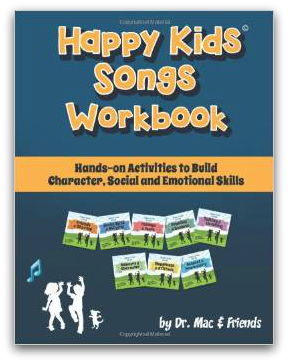
In addition to the songs, we were also given Happy Kids Songs Workbook.

What is it?

Happy Kids Songs is the brainchild of psychologist & well known singer/songwriter "Dr Mac" aka Don MacMannis (hint, he's written the songs for Jay Jay the Jet Plane on PBS). He understands how important these early years are in forming our children's character and the importance music has in their lives.

Happy Kids Songs has a total of 8 downloadable volumes each containing 5 songs pertaining to a certain theme in each album. The albums include:

  • Friends & Sharing
  • Social Skills & Bullying
  • Feelings & Fears
  • Practice & Success
  • Talking & Listening
  • Manners & Character
  • Happiness & Attitude
  • Respect & Responsibility

 Each theme addresses common issues our children face in their day to day life. The songs vary in the type of musical style and beat. They are sung by both adults and children and are quite honestly very catching in their tone, words and style. The songs are geared for children 3-8 but can easily be used for children younger & older than this age range.

How we used it:

The albums can be purchased & downloaded in their entirety or you can purchase each song individually. They were easy to download and once I downloaded them, I then burned them to a CD so we could listen to them anywhere. I also put them on our iPod as well. I played them while driving in the van as well as having the songs play as we went about our day. I have found that repetitively playing music has a way to ingrain itself in your mind which I think is the beauty of these albums. Before I knew it, my 3 year old was singing along and while she might not yet understand everything she is singing, it has presented an opportunity to teach her about what she is singing and the meaning behind the songs.


Not only are the songs a great tool in helping to instill character, you also have the option to download or purchase the physical workbook that accompanies all the albums. In the first part of the book, you are given the lyrics to each song (which comes in handy to make sure you are singing the correct lyrics!) as well as an activity page you can copy for your children to complete. While my 3 year old was a little young for some of these (like the crossword puzzles), I do plan to pull them back out when she is older to do. The back of the workbook contained ideas for activities to do to further enhance the learning of what each song teaches.

What we thought:

Overall, we enjoyed listening to these songs! We found them upbeat and catchy and had  no problem learning the lyrics after listening multiple times. While these songs are secular based, you could tie them into a Bible lesson which is what we did since ultimately our approach to learning is based on the Bible. You can stop by their website to listen to samples of each song.

Happy Kids Songs is $4.95 per album or $.99 per song download. The workbook can be downloaded for free to accompany your songs or purchased in its entirety for $12.95.

Click to read Crew Reviews

Crew Disclaimer

Lightning Literature and Composition

We are big readers in this house and are always at the library checking out books. Some of the reading is for fun and other times it's required reading for school. I wasn't sure what I wanted to do for a lit course for my girls this coming school year so I was excited  to be given the opportunity to review Lightning Literature and Composition-Grade 8 from Hewitt Homeschooling.


What is it?

Lightning Lit & Comp is a full year course for 8th and 9th graders that is designed to help develop a love and understanding of literature while exposing the student to different kinds of literature that they might not have read on their own. It's also a way to help them become better writers by reading different genres of stories and books as well as practicing different writing techniques. Lightning Lit takes what a student reads and helps them dig deeper into the book through a variety of methods and exercises.

We received 3 books for this level:
This course covers several books:
  • Stories & Poems for Extremely Intelligent Children (a book of short stories & poems)
  • Treasure Island
  • A Day of Pleasure
  • A Christmas Carol
  • The Hobbit
  • My Family and Other Animals
  • To Kill a Mockingbird
The student guide breaks each book or short story down into different sections that include an introduction to what is being read, a vocabulary list (which you could turn into your own vocab/spelling list), comprehension questions, a literary lesson, a mini-lesson and a variety of writing lessons. There isn't any writing in this book though the student completes different exercises in a notebook or on paper.

The student workbook is a consumable book that has the student working on grammar, analyzing parts of the book, doing crossword puzzles, short writing exercises and discovering the author's purpose just to name a few things. These activities vary by book which in my opinion keeps things new and engaging for the student.

The teachers guide contains a weekly planning schedule for 36 weeks as well as all the answers to everything the student completes in the workbook. It also has the discussion questions that aren't listed in the students book.

How did we use it?

The first story that was covered was A Crazy Tale from the book Stories and Poems for Extremely Intelligent Children.  Because this book is used interspersed between the full books throughout this course, I decided to buy it as we would be using it often. (hint, it's easy and inexpensive to find used online). All the other books in this curriculum are easily found at our local library though when purchasing this course, you do have the option of buying this course with all the literature books included.

I used this course with one of my 14 year old daughters about 3 times a week (only because it was summertime, during the school year it will be every day). She enjoyed diving into not only her reading assignments but looked forward to what the student guide & workbook taught her. She felt that the "clues in the story" section helped teach her to really pay attention to what she was reading and looking beyond just the words on the page and really see what the author was trying to convey. At the end of the 1st chapter in the student guide, it taught her how to take notes which was something she hadn't done much of in a while. Also included at the end of each chapter is several writing exercises you or your child can choose to complete. If you didn't have a writing curriculum you were using, you could easily use these exercises to fulfill a writing course!

I enjoyed the discussion questions that were in the teacher guide as being able to converse about the book showed me how much she was understanding about what she had read. I have also taken the vocabulary words and plugged them into the curriculum she uses for spelling & vocab. I love being able to take what we are using in one subject and use it for another subject.

My thoughts?

Bottom line, this curriculum has been a huge hit in our house! In fact, a few weeks after we started using it, I decided to go ahead and purchase Lightning Lit for two of my other children for this coming school year. I love the ease of use and how well everything is clearly laid out in not only the student books but the teachers guide. It makes this curriculum one you can just pick up and teach. Being a busy mom, not having to plan out the lessons is something I appreciate! Also, at this level, my daughter was able to do most of everything on her own. I also love the great literature these courses cover and am looking forward to this coming school year and seeing what all my children will learn!

Check out Hewitt Homeschool to see all the grades & curriculums they offer!

Connect with Hewitt Homeschooling on:
Facebook
Twitter
Pinterest
Google+
Their Blog

Click to read Crew Reviews
Crew Disclaimer